
The top findings from the BILL accounting firm AI ambition survey
—four volumes, one essential read.


Partnering with B2B research firm NewtonX, BILL surveyed 207 accounting firm owners, partners, directors, and managers on how AI is changing their firms today and what they're planning for tomorrow. The result is a four-volume series examining AI from awareness through execution to business model reinvention. Participants represent firms of all sizes and were recruited independently.


7 things that matter most
Ambition is high. Expectations aren't
keeping up.
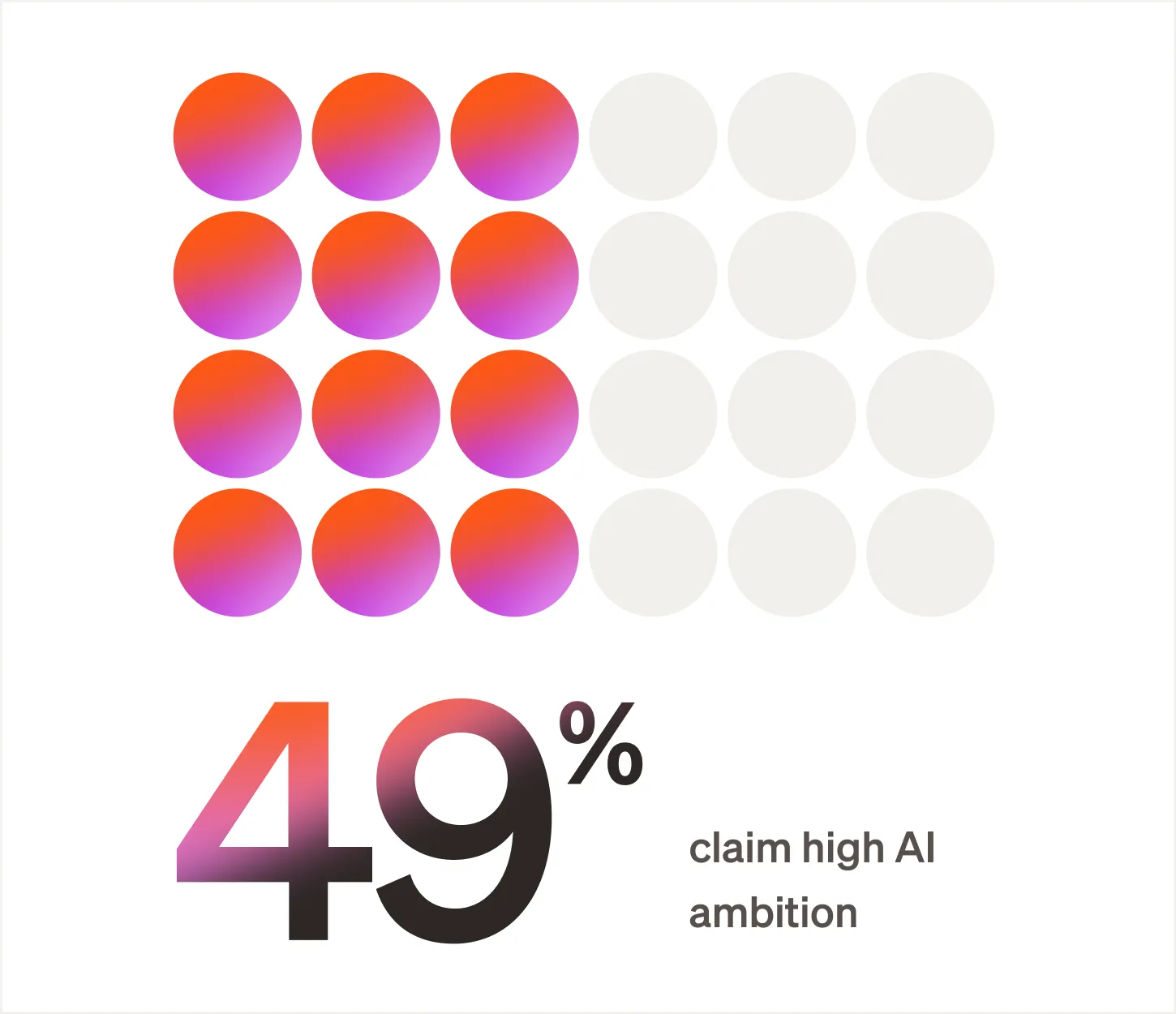
Nearly half of surveyed leaders describe their firm's AI ambition as high, yet 65% of those same firms expect only incremental improvement, not real transformation. The gap between stated ambition and anticipated outcomes runs through every volume of this series. High ambition, it turns out, isn't the differentiator. Execution is.
Finding 02
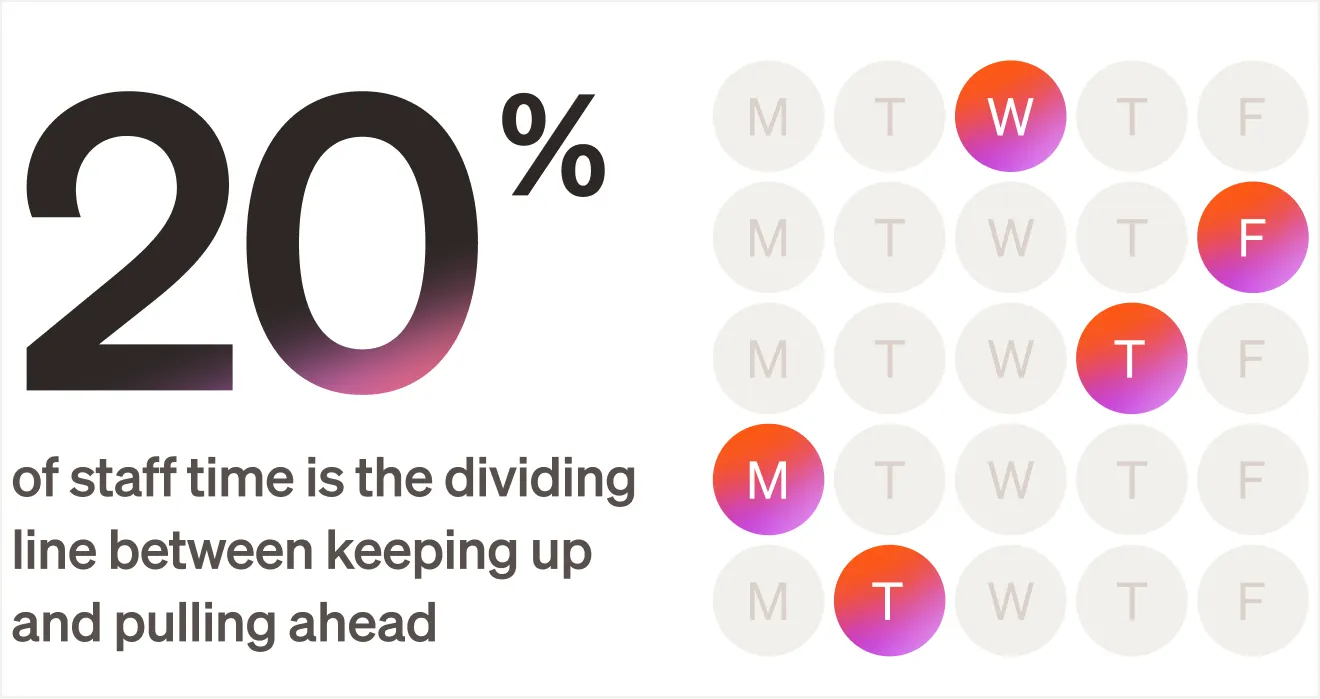
Firms dedicating 20% or more of staff time to AI adoption are 1.5–2x more likely to report meaningful progress toward their AI goals. Most firms are spending under 10%. The biggest unlock isn’t a larger software budget—it’s a bigger calendar commitment.
Finding 03
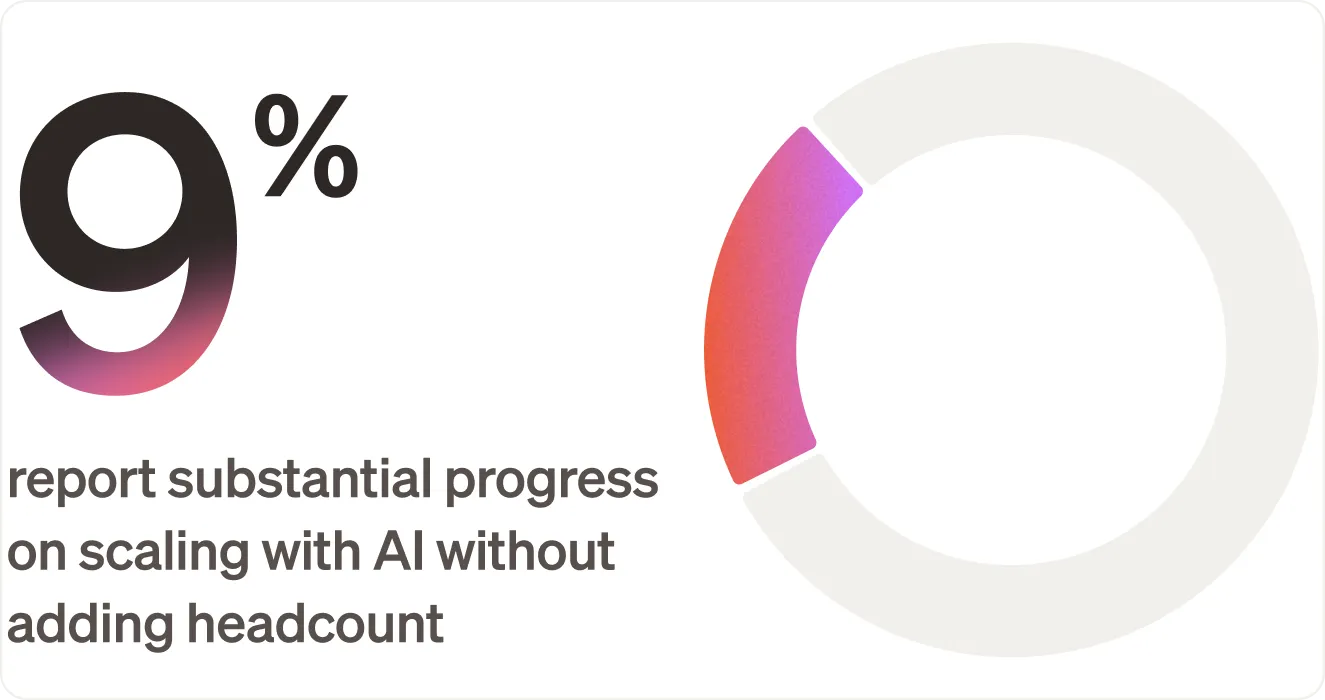
Scaling capacity without hiring is one of the most-cited AI goals across all firms. Yet only 9% report substantial progress on it. AI is delivering efficiency. But the capacity promise is still largely on paper.
Finding 04
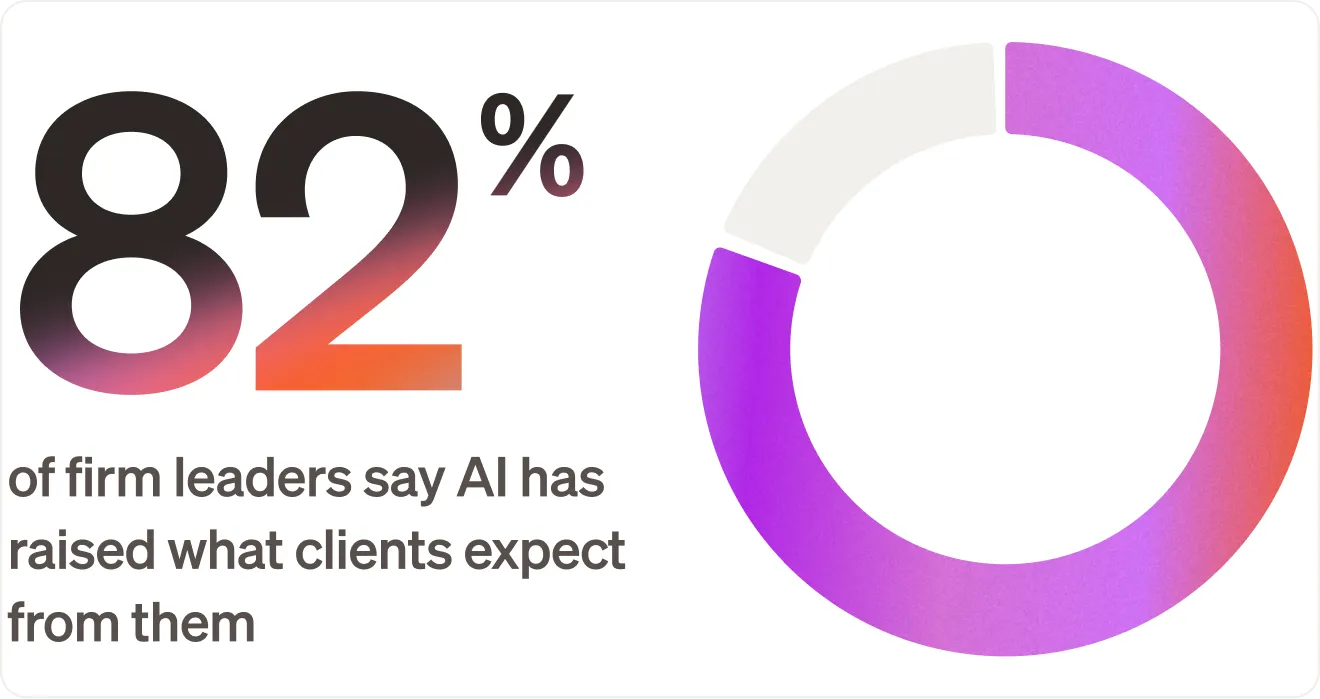
Speed of service (79%), advisory (67%), data privacy (66%), and cybersecurity (65%) top the list of areas where client expectations have grown. Most firms haven’t changed how they deliver. That gap shows up as rush requests, fee pressure, and churn risk.
Finding 05

Client advisory services (CAS) is the only service category showing near-parity between current adoption (38%) and planned expansion due to AI (39%). No other service in the survey is growing at this ratio. CAS is where the profession’s center of gravity is moving.
Finding 06
1 in 4 firms pursuing AI revenue streams see the highest return rate of any AI goal
Only 29% of firms have made new AI-enabled revenue streams a priority. But of those that did, one in four reported strong returns—the highest “significant impact” rate of any AI goal in the survey. New AI revenue is the most underfunded, highest-return bet in the data.

Finding 07
The workforce change is ahead—and pricing strategy isn’t keeping pace
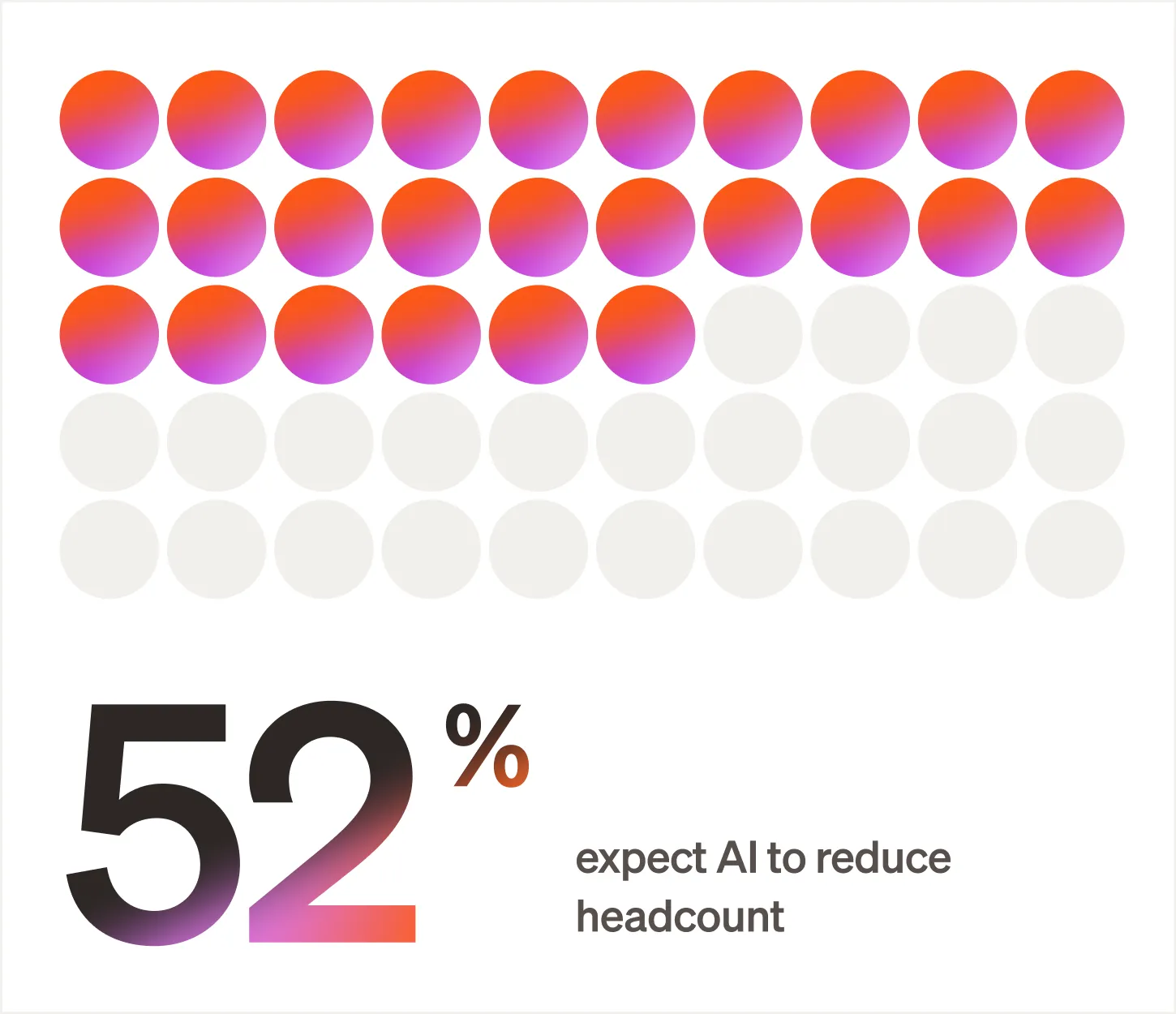
More than half of firm leaders expect AI to reduce headcount, a figure that climbs to 68% at large firms. Yet 81% of firms haven’t changed their pricing model as a direct result of AI. Among firms that have shifted to subscription or value-based models, 1 in 5 say AI drove the change. The firms that act on both workforce redesign and value-aligned pricing are likely to capture margin that others are leaving behind.
The divide is no longer about AI use. It’s about what you build with it.
Across all four volumes, the same tension repeats: high awareness, genuine ambition, real early wins—offset by an execution gap that is widening into a competitive one. AI has made accounting work faster. The firms that lead the next decade will be the ones that used that speed to rebuild their services, their pricing, and their talent model. That work starts with a decision—and with time deliberately set aside to act on it.
Read the full series
Each volume goes deeper on a different dimension of AI transformation in accounting.
Awareness, adoption, and attitudes
Where firms stand today—awareness, ambition levels, and the barriers holding most firms back.
Strategy and investments—from ambition to allocation
How firms are (and aren’t) putting time and money behind their AI goals.
Services and delivery—from compliance to advisory
CAS, client expectations, and how AI is reshaping firm delivery models.
Business model and pricing—monetizing AI
Talent shifts, structural change, and pricing strategies gaining ground.