What would you do with an extra 21 hours this week?
For most finance teams, that's not a hypothetical. According to BILL's 2026 State of AI in Finance report, a survey of 500 finance leaders at small and midsize organizations, AI tools are saving financial operations employees an average of 21 hours per week. That's more than half a standard workweek returned to the people who need it most.
But reclaimed time is only part of the story. In an industry where a misplaced decimal can cascade into a serious problem, speed without accuracy isn't a win—it's a liability. The report surfaces a tension that every finance leader is navigating right now: AI delivers extraordinary efficiency, but trust has to be built alongside it.
Here are four takeaways worth paying attention to.
The fast facts
- Time saved: 21 hours per week
- Accuracy: 75% of leaders see fewer errors with AI.
- Budget: 13% of finance budgets now go toward AI.
- The goal: 69% of teams plan to spend even more on AI over the next three years.
1. Where finance teams are using AI
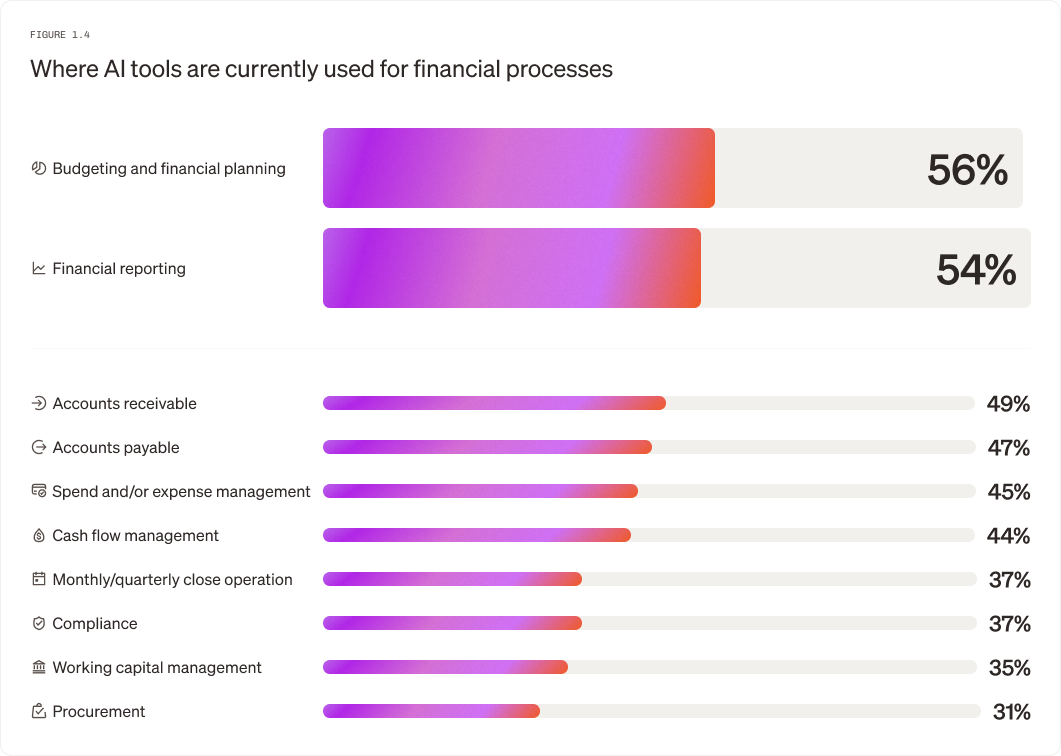
The 21-hour time savings isn't magic; it’s the result of strategic deployment. Finance teams are prioritizing internal, high-volume tasks where the ROI is most immediate.
- Current adoption leaders:
- Budgeting & financial planning - 56%
- Financial reporting - 54%
- Accounts receivable - 49%
- Accounts payable - 47%
- Areas of slower adoption, due to higher external risks:
- Compliance - 37%
- Procurement - 31%
Are early AI adopters reaping fast results from their investment? The full report suggests that finance teams are seeing measurable progress toward key goals.
2. When AI is deployed well, it doesn't just save time—it catches mistakes
.png)
In finance, accuracy isn't a nice-to-have. It's the difference between a clean close and a week spent hunting down discrepancies.
- Change in human errors after AI adoption:
- Measurable decrease - 75% of respondents
- No change - 14%
- Errors increased - 10%
AI doesn't lose focus at 4 pm on a Friday, and it doesn't transpose digits when it's rushing to meet a deadline. It applies the same level of attention to the last invoice of the day as the first.
- Goals of adopting AI tools:
- Improving accuracy - 49% of respondents named this a primary goal
AI isn't just a speed play. For finance teams, it's becoming a reliability play, too—an extra set of eyes on the data that doesn't blink. But the quality of the AI implementation matters.
The data suggests that teams need to think deeply about how they want to apply and manage the process of adding AI to their workflows.
3. Trust is being earned, not assumed—and that's a good thing
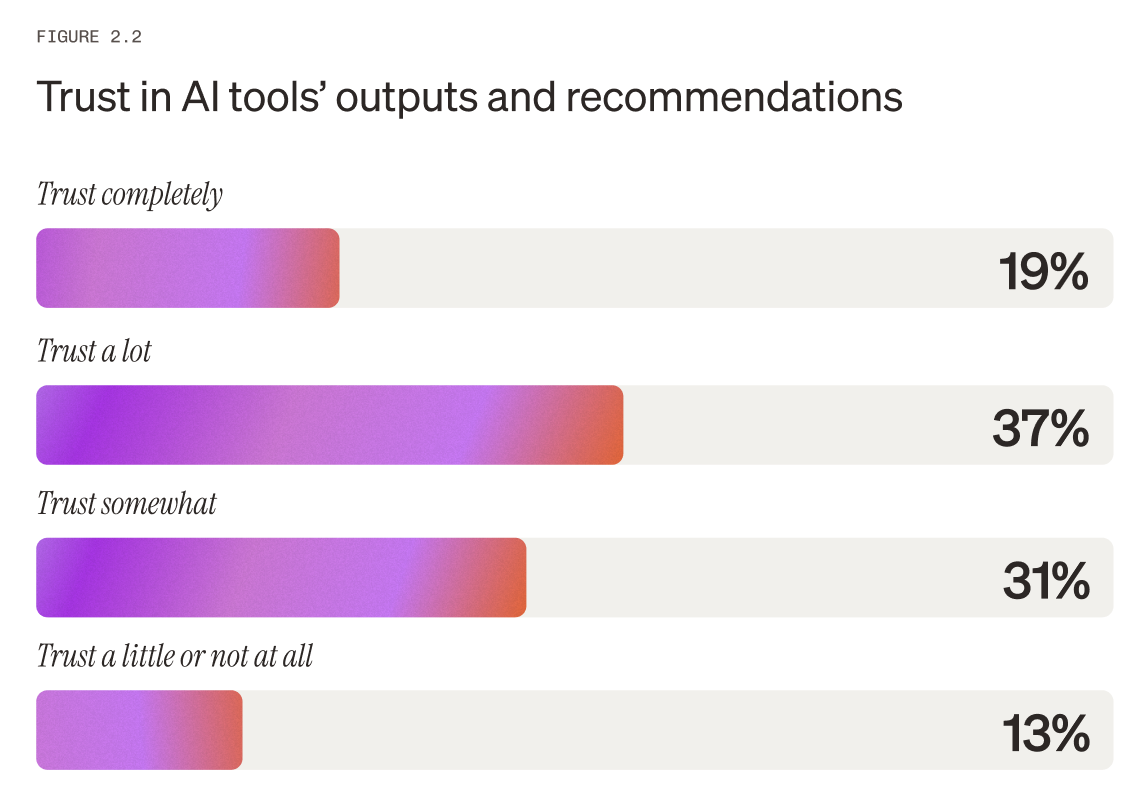
How much do finance leaders trust AI tools' outputs?
- "Completely" or "a lot" - 56%
- "Somewhat" or "not at all" - 44%
That's not a crisis of confidence—it's a reasonable posture for an industry where precision is everything.
The top barriers to AI adoption:
- Implementation costs - 43%
- Data security concerns - 43%
- Integration challenges - 37%
- Data quality concerns - 36%
This is where purpose-built financial AI separates itself from general-purpose tools.
A financial AI platform built on real-world transaction data—like BILL's platform, based on the aggregated experience of over $1 trillion in secure payments—can check and back its outputs with patterns drawn from actual business operations.
The report outlines how leaders are managing adding AI to their workflows, along with the safeguards they're putting into place and what they're looking for from AI vendors.
4. The investment is already happening
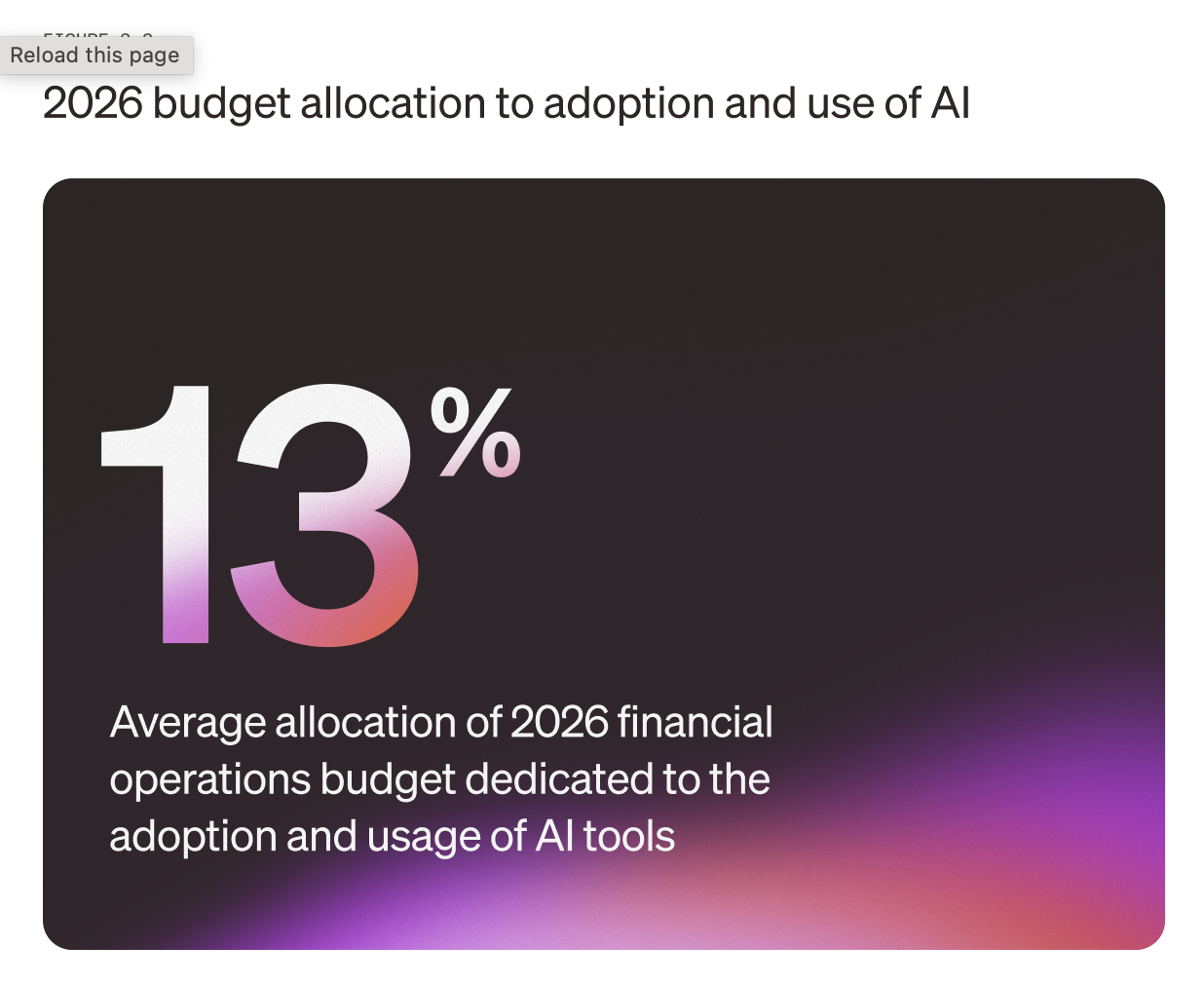
If there were any doubt about whether AI in finance has moved from experiment to commitment, the budget numbers settle it.
2026 financial operations budgets:
- Average allocated to AI tool adoption and usage: 13%
Top areas for planned budget growth over the next 3 years:
- AI budgets - 69%
- IT/cybersecurity - 60%
- Finance and accounting - 51%
- Operations - 46%
This isn't hype. It's planning. Organizations are putting real dollars behind AI because they've seen real results, and they're positioning themselves to stay competitive as the technology matures.
Get the full report to see where finance leaders expect AI to play a major role or even completely drive financial processes within the next three years.
A balanced ledger
The 2026 State of AI in Finance report paints a picture of an industry at a pivotal moment. The efficiency gains are undeniable—21 hours a week, 75% of finance leaders reporting measurably fewer errors, and clear progress on the goals that matter most.
But the leaders getting the most out of AI are the ones building trust into the process: asking the right questions, implementing the right guardrails, and choosing tools that earn confidence through transparency and results.
The full report goes deeper into all of this: adoption patterns by organization size, the specific policies leaders are putting in place, where AI is headed over the next three years, and more.
If you're navigating these decisions for your own team, it's worth the read.