In January 2026, BILL collaborated with Treasury Webinars to conduct an original survey—AR and cash application challenges: benchmarks, collaboration, technology—to explore the challenges businesses face when it comes to driving efficiencies in cash application.
Survey respondents shared useful insights, which are also discussed in our recent webinar, available now on-demand.
Cash application is a priority for 90% of companies
Bottom line? Efficient cash application matters. Over 90% of 211 companies surveyed report that cash application will be a priority in 2026. Having a manual and cumbersome cash application process was identified among the top three factors that have the biggest negative impact on AR success metrics.
Straight-through processing only 50% or lower for 70% of respondents
The efficiency of cash application at the companies surveyed was examined relative to the average straight-through processing time to apply cash to a customer’s account. (Figure 1. And Figure 2.)
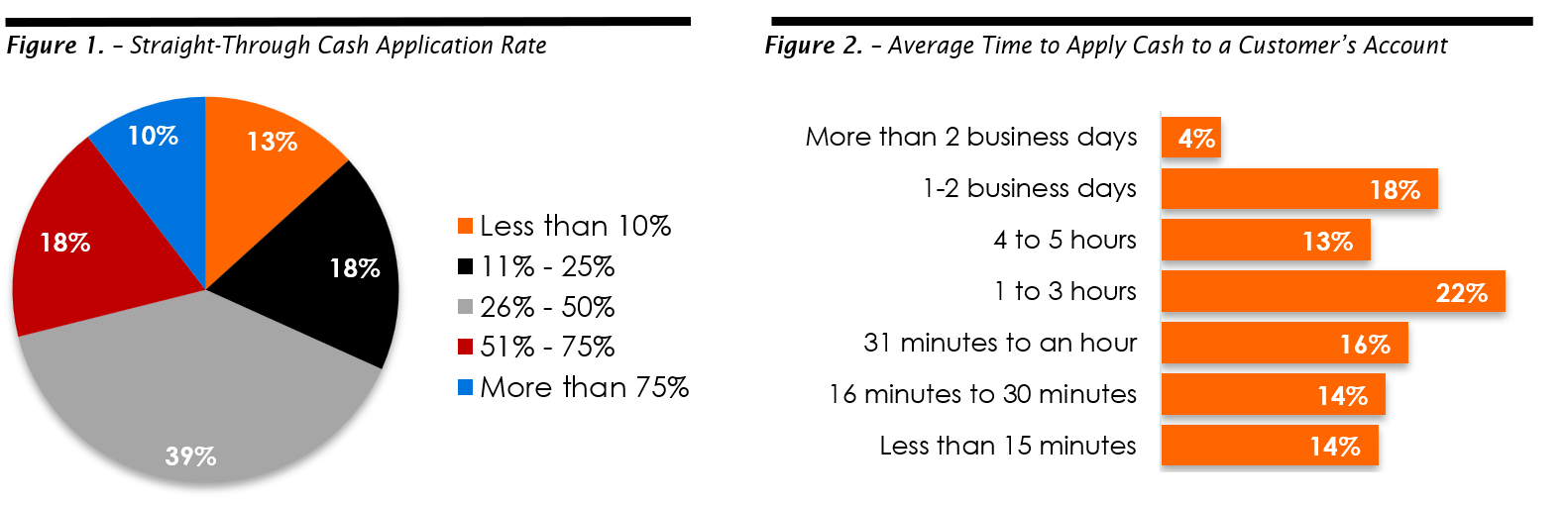
Seventy percent of companies surveyed have at best a 50% straight-through processing rate—meaning roughly half of those invoice-to-deposit flows required manual intervention at some point in the chain—while 31% percent of companies surveyed have at best a 25% straight-through processing rate.
In terms of cash application time, twenty-two percent take at least a day to apply cash to a customer account, and only 30% can apply cash to a customer account in 30 minutes or less.
Technology is key to addressing cash application challenges
What's causing these delays and manual interventions? The companies surveyed reported challenges spanning disputes, missing data, lockbox issues, and other delays.
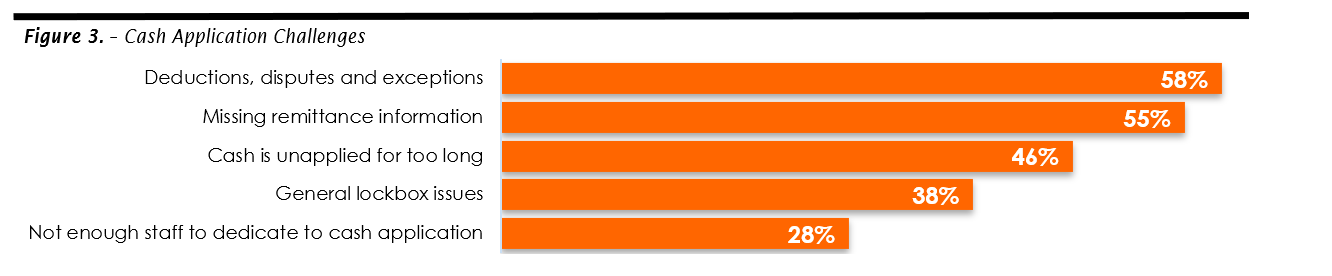
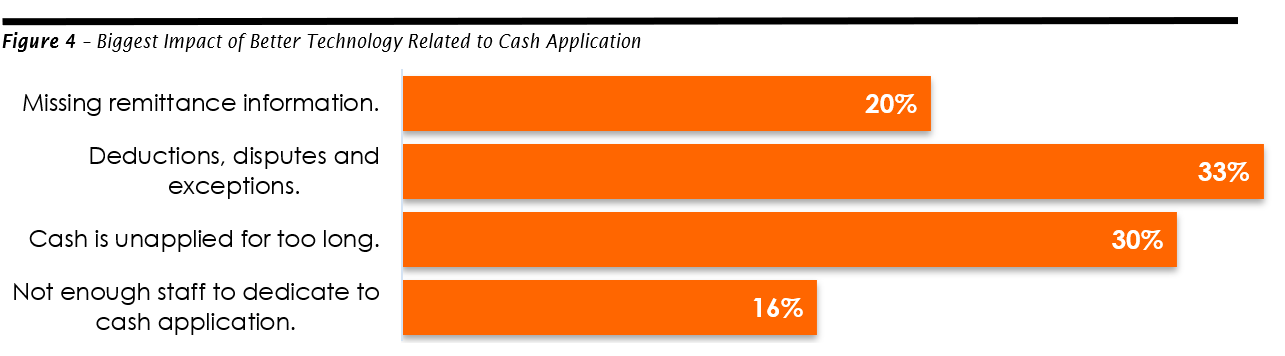
However, technology is viewed as a key solution to help mitigate these ongoing cash application challenges.
The companies surveyed that use at least one lockbox (91%) reported challenges related to lockbox services. When asked if better technology would reduce the need for lockboxes, the majority of companies agreed.
As companies evaluate their needs in the near-term, it’s worth considering how advances in AI and other financial automation technology may reduce ongoing lockbox challenges, or eliminate the need for lockboxes altogether.
Stream more stats on demand
If you want to learn more about the results and implications of the AR and cash application challenges: benchmarks, collaboration, and technology survey, check out our recent webinar, available now on-demand.
Or visit our supplier page to learn how BILL for Suppliers offers businesses a lightweight way to automate incoming payments and cash application.
Appendix:
The AR & Cash Application Survey: Five Key Themes and Implications
Cash application nightmares have only gotten worse for companies despite all of the advances in AI and related technology. Why is cash application still so difficult? What factors drive cash application issues and inefficiencies? What can companies do to mitigate cash application headaches? Do opportunities exist for companies to improve cash application efficiency while lowering DSO and improving customer relationships? In Q1 of 2026, Bill, in collaboration with Treasury Webinars, conducted the original survey: AR & Cash Application Challenges: Benchmarks, Collaboration, to explore these issues.
An analysis of the survey results yielded several key themes and inferences that can help companies deliver more value from their AR, treasury and finance teams. The inferences and key results that drive five of these inferences are:
- Companies track and experience meaningful differences in processing payment types, and checks are the most expensive type of payment to process.
- 65% of companies see at least a $1.00 difference in processing a check vs. and ACH payment, and 24% see at least a $3.00 difference.
- 65% of companies see at least a $1.00 difference in processing a check vs. a card payment, and 25% see at least a $3.00 difference.
- 65% of companies see at least a $1.00 difference in processing an ACH vs. a card payment, and 17% see at least a $3.00 difference.
- Checks are still prevalent even though companies can choose how they get paid
- Thirty-five percent of companies, which each process at least 100 invoices a month, receive more than 25% of incoming payments via check.
- Twenty-two percent of companies receive mor than 50% of incoming payments via check.
- Over seventy-five percent of companies receive at least 10% of incoming payments via check.
- Cash application matters
- Ninety-three percent of the 211 companies surveyed are making cash application efficiency a priority in 2026.
- Cumbersome cash application processes were consistently identified as one of the top three factors with the most significant negative impact on AR performance.
- Deductions, disputes, and exceptions represent the greatest challenge to cash application efficiency and the area with the most potential improvement through the right technology.
- Fifty-eight percent of companies identified deductions, disputes, and exceptions as a cash application challenge.
- Companies identified the area of greatest impact with better technology related to cash application most often as deductions, disputes, and exceptions (33%).
- Improved cash application efficiency can remove the need for lockbox services
- Only 13% of companies disagreed that the need for lockbox services would go away if cash application was more efficient.
- Companies identified the deduction, disputes and exceptions (58%), missing remittance information (55%) and cash unapplied too long (46%) as the cash application issues most frequently experienced. The cash application issues that would be most effectively addressed through improved technology were deductions, disputes, and resolutions (33%), followed by unapplied cash aging too long (30%) and missing remittance information (20%).