Most startups don't fail to build business credit because the process is complicated. They fail because they skip foundational steps, mix personal and business finances, or open vendor accounts with suppliers that never report payment activity to a bureau. The fix for nearly every one of these mistakes is straightforward once you know what to look for. This guide walks through the eight that trip up new businesses most often, and what to do instead.
Why business credit matters before you think you need it
A business credit profile determines whether vendors extend you net-30 terms, whether a bank approves a line of credit without a personal guarantee, and whether you qualify for better rates on equipment financing or a business card. Three bureaus dominate this space: Dun & Bradstreet, Experian Business, and Equifax Business. Each pulls different data and produces different scores, and lenders don't all check the same one.
Suppliers and government contracting portals tend to check Dun & Bradstreet first, since it is built around the D-U-N-S number and has the deepest trade-payment history. Community banks and credit unions lean more heavily on Experian and Equifax when underwriting loans. If you only build a profile with one bureau, you are invisible to whoever checks the other two, which is mistake number one in disguise.
8 Common business credit building mistakes & how to avoid them
1. Treating business and personal finances as interchangeable
Sole proprietors and freelancers who never formally separate their finances almost never develop a real business credit file, because there is no distinct legal entity for bureaus to track. Every purchase, every credit application, every missed payment ties straight back to the owner's personal credit.
The fix: Form an LLC or corporation, get a federal EIN from the IRS, and open a dedicated business bank account with a separate business address and phone number. This is the foundation everything else sits on. Skipping it means every later step: vendor accounts, business cards, loan applications, which quietly reverts to relying on your personal credit history instead of building a new one.
Once your business finances are separated, keeping them that way gets easier with the right tools. BILL Accounts Payable routes vendor payments through your business account with a complete audit trail, so there is no ambiguity about which expenses belong to the business and which belong to the owner.
2. Never registering with Dun & Bradstreet
Some startups assume a credit profile appears automatically once they start paying bills. It doesn't. Without a D-U-N-S number, Dun & Bradstreet has no file to attach activity to, and a PAYDEX score never generates.
The fix: Apply for a free D-U-N-S number directly through Dun & Bradstreet's website. Standard processing runs up to 30 business days; expedited processing (currently priced around $229) can cut that to roughly 1 to 8 business days if you need it faster. Apply the same day you incorporate; the waiting period runs in the background while you handle other setup tasks, so there is no reason to delay it.
3. Opening vendor accounts that don't report to any bureau
This is the single most common and most invisible mistake. A startup opens net-30 accounts with a few suppliers, pays on time for months, and still shows no business credit history; the vendor never reported the payment activity to D&B, Experian, or Equifax in the first place.
The fix: Before opening any vendor tradeline, ask directly: "Do you report payment data to Dun & Bradstreet, Experian Business, or Equifax Business?" Many office supply, shipping, and fuel-card vendors do report and are commonly used as starter tradelines specifically because they extend credit to newer businesses with limited history. Confirm reporting in writing or in the account terms; do not take a verbal assurance from a sales rep at face value.
Managing multiple vendor accounts gets easier when payments are centralized. BILL Accounts Payable lets you schedule, track, and document payments to each vendor in one place, so you always know which accounts have been paid and when, which is the exact record you need if a bureau reports an error.
4. Paying on the due date instead of early
Paying exactly on time feels responsible, and it is, but it caps your PAYDEX score around 80, not higher. D&B's model is dollar-weighted and rewards early payment specifically. A business that consistently pays before terms are due can push into the 90s, which matters when a supplier is deciding between offering you net-30 or net-60 terms on a larger order.
The fix: Build payment timing into your cash flow planning, not just your to-do list. If working capital allows it, pay reporting vendors a few days ahead of the due date rather than on it. BILL Spend & Expense lets finance teams schedule and track vendor payments against due dates, so early payments happen by design rather than by accident. When payment timing is visible and automated, you stop leaving PAYDEX points on the table.
5. Applying for too much credit too quickly
Startups in growth mode sometimes apply for several business cards, a line of credit, and multiple vendor accounts in the same month, hoping to speed up the credit-building timeline. Instead, this produces a cluster of hard inquiries and high utilization relative to a thin credit history, which can drag down risk-based scores like Experian's Intelliscore Plus or Equifax's Business Credit Risk Score.
The fix: Space out credit applications and prioritize a small number of accounts you can manage well. Keep utilization well under 30% of any available limit. A thinner file with clean, on-time history outperforms a thicker file with strained balances. For guidance on how many business credit cards makes sense at each stage, see how many business credit cards should you have.
6. Ignoring the bureau your target lender actually uses
A founder builds a strong D&B profile, applies for a bank loan, and gets a lukewarm response; the bank pulled Experian and Equifax, not Dun & Bradstreet, and those files are thin or nonexistent.
The fix: Match your credit-building activity to your near-term financing goals.
If you are chasing government contracts or supplier relationships, prioritize Dun & Bradstreet and a strong PAYDEX score. If you are planning to apply for a bank loan or SBA-backed financing, build Experian and Equifax simultaneously, since many reporting vendors and business credit cards report to all three, so this does not require separate applications. If SBA financing is on the table, remember that the FICO SBSS score blends personal and business data, so your personal credit still matters even as your business file develops.
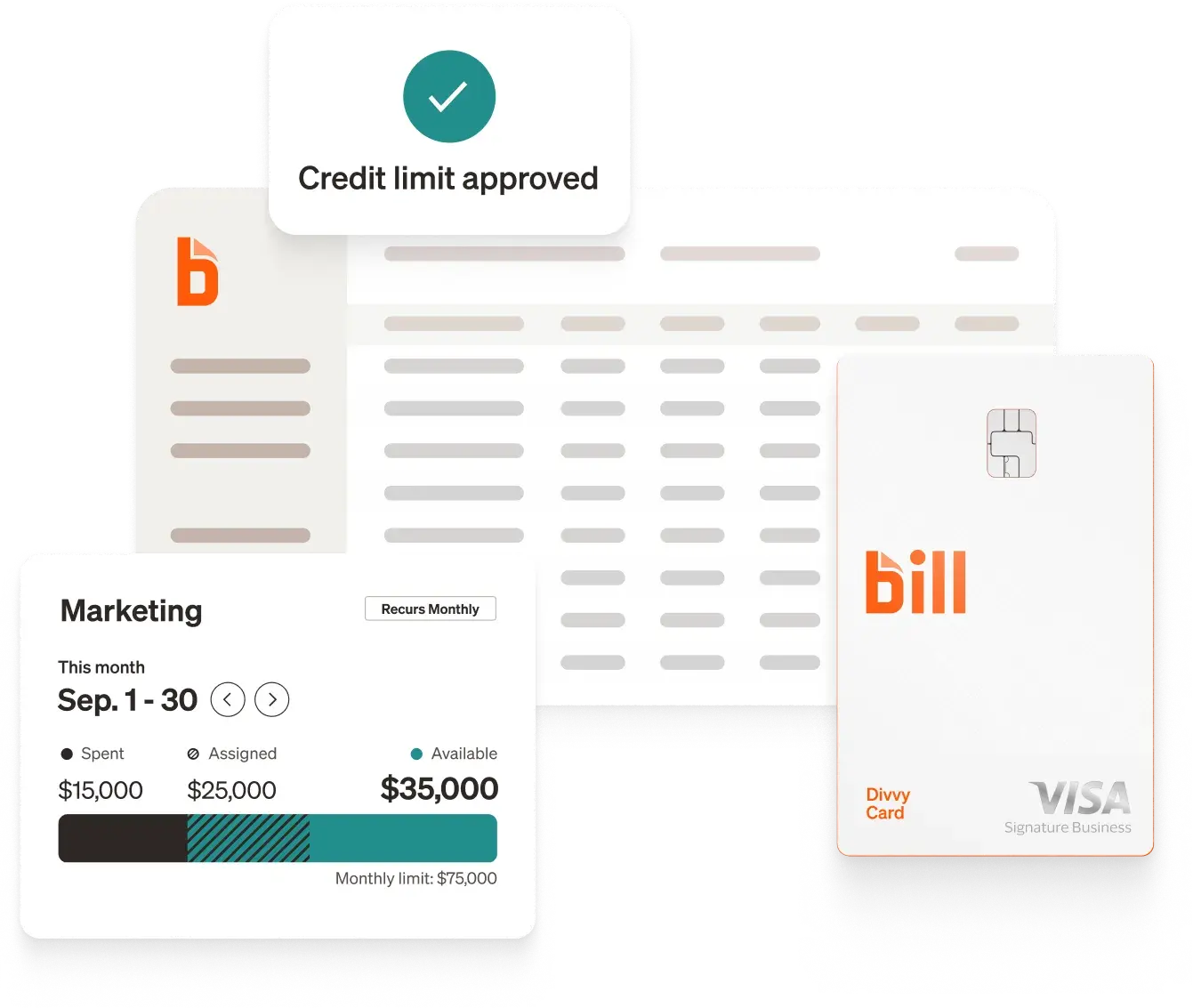
One card that addresses the bureau-coverage gap directly is the BILL Divvy Card.[1] It reports card payment performance to the Small Business Financial Exchange (SBFE®), which feeds into commercial credit bureau data used by lenders. On-time payments can help build business credit history over time.[1] See BILL Divvy Card requirements to understand eligibility.
Check all three bureau profiles every six months to confirm reporting is happening as expected and nothing is missing.
7. Never checking reports for errors
Business credit bureaus are not governed by the same dispute rules as consumer bureaus, but mismatched addresses, duplicate files, or a vendor reporting the wrong payment date can quietly suppress a score for months before anyone notices.
The fix: Pull your reports periodically. D&B offers a free Credit Insights plan with limited PAYDEX visibility, and third-party monitoring services can show summary data across all three bureaus in one place. If you find an error, dispute it directly with the bureau in writing, including documentation of the correct information. Review your financial statements alongside your credit reports; discrepancies in payment records are easier to spot when your books are accurate and current.
8: Waiting until you need credit to start building it
Business credit takes months to develop meaningful depth. Bureaus need repeated, reported payment activity before a stable score emerges. Startups that wait until they need a loan to start this process are usually six to twelve months too late.
The fix: Start the process in your first weeks of operation, even if you do not need financing yet. Registering for a D-U-N-S number, opening one or two reporting vendor accounts, and getting a business card cost little and take almost no daily effort, but the clock on your credit history only starts once you begin. For a step-by-step walkthrough of the full process, see how to build business credit.
A practical startup sequence
If you are starting from zero, this is the order that avoids most of the mistakes above.
- Step 1: Form an LLC or corporation and get an EIN.
- Step 2: Open a dedicated business bank account and get a separate business phone number and address.
- Step 3: Apply for a free D-U-N-S number immediately; the wait time runs in the background.
- Step 4: Open two to three vendor accounts that explicitly confirm they report to D&B, Experian, or Equifax.
- Step 5: Apply for one business credit card sized to your actual spend, and use a spend management tool to keep utilization and payment timing under control. The BILL Divvy Card[1] reports to SBFE® and can help build commercial credit history with on-time payments.[1]
- Step 6: Pay reporting accounts a few days before the due date whenever cash flow allows.
- Step 7: Check all three bureau profiles every six months and dispute any errors you find.
How BILL helps you build business credit
Business credit is not built in a single action. It is a byproduct of how consistently you manage vendor payments, cards, and cash flow every month. BILL supports that consistency at each stage.
Keeping business and personal finances clean
BILL Accounts Payable routes all vendor payments through your business account with documented approval workflows and audit trails. This keeps the financial separation bureaus and lenders need to evaluate your business independently, and it gives you clean records to reference if a bureau reports a payment error.
Never missing a payment due date
Missing or late payments to reporting vendors can undo months of progress. BILL Accounts Payable lets you schedule payments in advance so due dates don't slip. Combined with BILL Spend & Expense, finance teams get a single view of what is owed, when, and to whom, so early payments happen systematically rather than by memory.
Managing card utilization and spend
High utilization relative to your credit limit drags down risk-based scores. BILL Spend & Expense lets you set per-card and per-department spend limits before transactions happen, so utilization stays predictable. Real-time visibility into card balances means you can repay draws before the billing cycle closes, a simple habit that keeps utilization low.
Building commercial credit history with the card itself
The BILL Divvy Card[1] reports card payment performance to the Small Business Financial Exchange (SBFE®). On-time payments can help build business credit history over time, contributing to the commercial credit profile lenders and suppliers use to evaluate your business.[1]
Integrations that keep your books lender-ready
BILL integrates with QuickBooks, Xero, Oracle NetSuite, Sage Intacct, and Microsoft Dynamics, so payment data flows into your accounting system without manual reconciliation. When a lender asks for financial statements, you have accurate, current records rather than a catch-up project.
Disclosures
This content is presented "as is," and is not intended to provide tax, legal or financial advice. Please consult your advisor with any questions.
[1] The BILL Divvy Card may be issued by one of Divvy Pay, LLC's bank partners. The BILL Divvy Card is not a deposit product. For your specific lender, see your Card Agreement. Eligibility for a BILL Spend & Expense account is subject to credit approval and underwriting. Credit lines and the advertised range are not guaranteed and will be determined upon application approval. Credit limits and terms, including rates and fees, may vary based on eligibility criteria. BILL reports card payment performance to the Small Business Financial Exchange (SBFE®); on-time payments can help build business credit history, but individual results will vary.