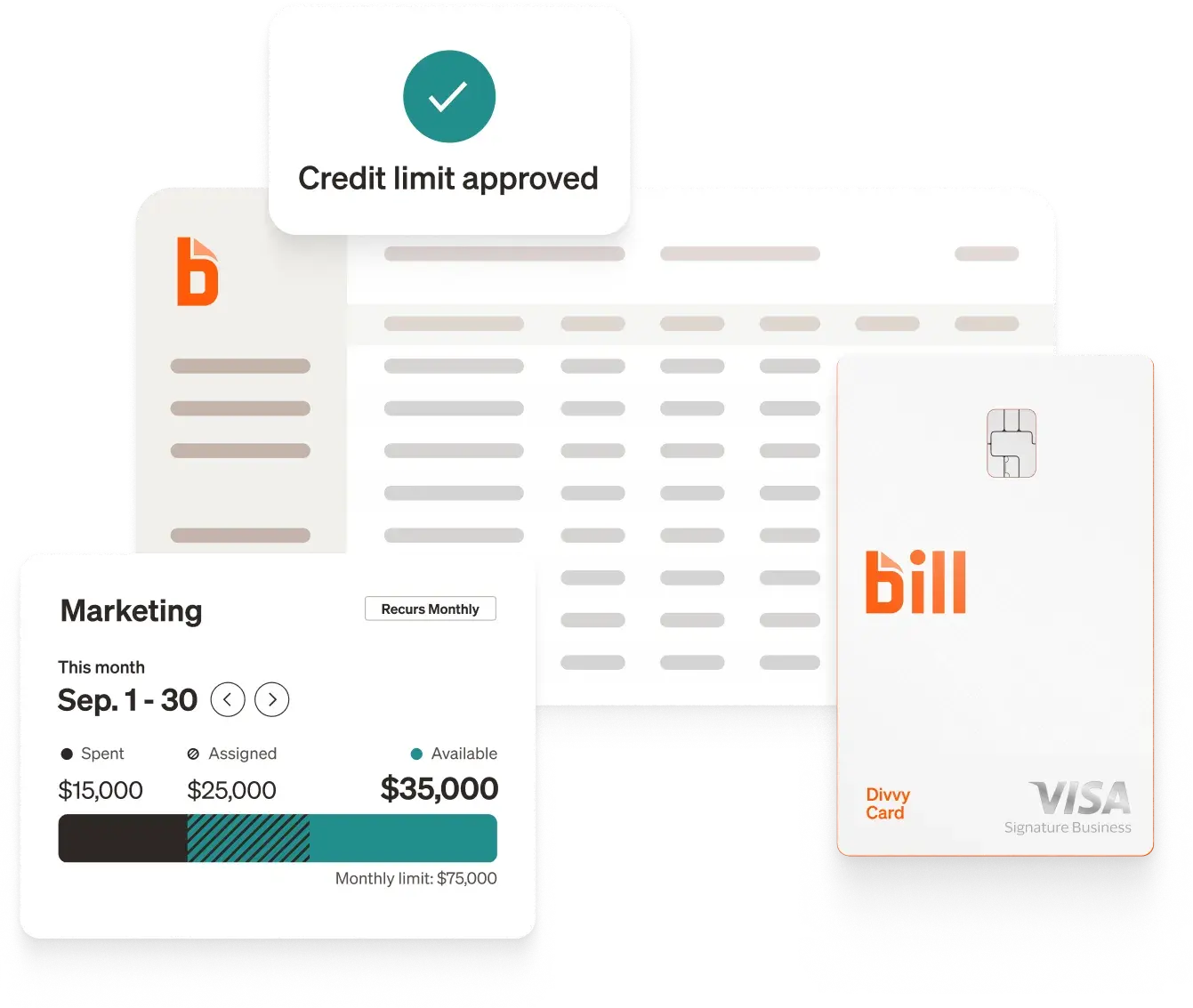
Quick answer: BILL Spend & Expense is a strong Concur alternative for teams that want card-native expense management, enforceable budgets, and built-in travel on one platform with AP and AR, as free to use software.[1]
Key takeaways
BILL is the best overall choice because it combines tracking expenses, paying bills, and collecting payments in one tool.
BILL Spend & Expense is free, while Expensify is the cheapest paid option at five dollars a month.
Navan works best for large companies, while Brex is great for teams focused on company credit cards.
Concur alternatives compared at a glance
For a wider market view, see BILL's guide to travel and expense management software. Selection criteria: pricing model, spend controls, receipt capture, ERP integrations, and support. Comparison based on competitive analysis of publicly available documentation as of May 2026; vendor prices checked October 2026.[2]
| Platform | Best For | Pricing Model | Starting Price | Primary Differentiator vs. Concur | Key Integrations / Ecosystem |
|---|---|---|---|---|---|
| SAP Concur (baseline) |
Managed travel programs and SAP-centric enterprises | Per-report fees with Base and Plus tiers; add-ons and implementation quoted separately | $7 per report (Base), $11 per report (Plus), October 2026 | Broad SAP-centric ecosystem and travel booking; integration depth varies by ERP | SAP suite; ERP depth varies |
| BILL | Teams that want expenses, AP, and AR on one platform | Free to use Spend & Expense software with rewards;[3] tiered AP and AR subscriptions plus transaction fees | $0 for Spend & Expense software, October 2026[1] | Cash Account earning about 3% APY with up to $200M FDIC insurance;[4] built-in travel; full AR workflows | QuickBooks, Xero, Oracle NetSuite, Sage Intacct, and Microsoft Dynamics;[5] custom file integrations for niche ERPs |
| Ramp | Card-first teams that want spend, travel, and basic bill pay | $0 plan plus Plus plan billed per user and a platform fee; AP transaction fees | $15 per user per month plus platform fee (Plus), October 2026 | Advanced controls and automations sit on paid Plus and Enterprise tiers | NetSuite, Sage Intacct, Acumatica, Dynamics 365 (Plus); universal CSV support |
| Brex | Card-first teams with spend and travel needs | $0 Essentials, Premium per user, custom Enterprise | $12 per user per month (Premium), October 2026 | Advanced budgets, controls, and automations gated to paid tiers | Card-transaction sync focused; lighter AP sync |
| Expensify | Lean teams that want a low per-member entry price | Per-member pricing: Collect and Control | $5 per member per month (Collect), October 2026 | Per-member fees; higher pricing without card use or annual prepay (up to $36 per member per month) | Expense sync focused; narrower ERP coverage |
| Navan | Travel-heavy teams and larger organizations | Per active expensing user; travel funded by commissions | $15 per user per month after 5 users, October 2026 | Travel-first design with strong policy enforcement and booking inventory | Integrates with major ERPs |
See more BILL integrations.
Top 5 Concur alternatives for 2027
1. BILL: Best for teams that want expenses, AP, and AR on one platform
The Verdict: BILL fits finance teams that want Spend & Expense, accounts payable, and accounts receivable in one place instead of an expense-only tool.
Key Specifications:
- Starting price: $0 for Spend & Expense software; transaction fees may apply.[1] AP and AR are on tiered subscriptions; see BILL pricing. As of October 2026.
- Free tier limits: Spend & Expense is free to use software for users;[1] rewards are available.[3]
- Implementation window: [DATA NEEDED: BILL onboarding timeline, source/owner]
- Key limitations: Expense workflows are card-native, so teams that want to keep an existing card program should confirm fit before switching.[6] BILL Divvy became BILL Spend & Expense, so older Divvy references describe the same product.
Why switch: Concur is report-centric: employees build expense reports after the fact, and finance chases receipts at month end. BILL is card-native, with receipt capture and coding at the time of purchase, budgets that BILL can enforce rather than only display, and corporate cards with built-in controls and automations.[2]
BILL also offers mobile apps and approval workflows for spend, AP, and AR. BILL Travel unifies booking, policy, payment, and reconciliation in one workflow, and the Cash Account earns about 3% APY with up to $200M FDIC insurance.[4] Concur has no native AR module and no integrated yield-bearing cash account, as of May 2026.[2] Multiple credit line options optimize cash flow or cash back, with one predictable credit line option.[7] Tracy Owens, Accounting Manager at Blackstone, said month-end credit card review went from about three days to about three hours with more than 40 cardholders after the company adopted BILL Spend & Expense.
2. Ramp: Best for card-first teams that want spend and basic bill pay
The Verdict: Ramp suits teams that prioritize corporate cards, expense management, and built-in travel and are comfortable moving advanced controls onto a paid plan.
Key Specifications:
- Starting price: $15 per user per month on Plus, plus a platform fee based on team size; annual billing is about 20% lower (Ramp pricing, October 2026).
- Free tier limits: A $0 plan covers cards and core spend; budgets, advanced controls, and automations are gated to paid Plus and Enterprise tiers (BILL competitive analysis, May 2026).
- Implementation window: Contact vendor.
- Key limitations: Accounts receivable is recently announced beta functionality with limited availability and scope; priority live support is limited to paid plans, and implementation services cost extra (BILL competitive analysis, August 2026).
Why switch: Ramp replaces Concur's report-centric workflow with card-native expense capture. Its bill pay automation is decent but has shallower controls than a dedicated AP product, and AP transaction fees apply on top of per-user fees. Ramp's Plus plan adds multi-entity support, AI-driven expense review, and audit logs, so teams that need those should price the paid tier rather than the $0 plan.
3. Brex: Best for card-first teams with spend and travel needs
The Verdict: Brex fits card-first teams that want strong spend and travel capabilities and plan to move to a paid tier as controls and approvals become more complex.
Key Specifications:
- Starting price: $12 per user per month on Premium; Essentials is $0; Enterprise is custom (Brex pricing, October 2026).
- Free tier limits: Essentials includes global corporate cards, core spend, and up to two entities; advanced budgets, controls, and automations require paid tiers.
- Implementation window: Contact vendor.
- Key limitations: Bill pay offers basic approvals, and accounts receivable is newer, requires a Brex business account, and supports ACH and wire only (BILL competitive analysis, May 2026).
Why switch: Brex offers 24/7 support and onboarding, though dedicated success is mainly for paying customers and lower tiers report slower response. Credit limits are dynamic and based on bank balances, so they can fluctuate. Compared with Concur, Brex trades enterprise travel depth for a modern card-first experience, with a lighter AP sync to the ERP.
4. Expensify: Best for lean teams that want a low per-member entry price
The Verdict: Expensify suits small teams that want straightforward receipt scanning and expense reports at the lowest paid per-member price among the tools reviewed.
Key Specifications:
- Starting price: $5 per member per month on Collect; Control is $18 per included member on an annual plan and $36 per member on pay-per-use (Expensify pricing, October 2026).
- Free tier limits: Individuals get up to 25 SmartScans per month; team workspaces require Collect or Control.
- Implementation window: Contact vendor.
- Key limitations: Basic invoicing with no full AR workflows; basic bill pay by ACH with no native procurement, W-9 and 1099 handling, or vendor network (BILL competitive analysis, May 2026).
Why switch: Expensify keeps the report-based model that frustrates some Concur users, so the move makes the most sense when the goal is lower cost rather than a new workflow. It follows the report-based model with a built-in travel option and a mobile app focused on travel and expense, with basic support for AP and AR. Setup is heavier than card-native tools, and reconciliation depends more on manual receipt chasing.
5. Navan: Best for travel-heavy teams and larger organizations
The Verdict: Navan fits organizations where managed travel drives the decision and expense is secondary, with strong policy enforcement, booking inventory, and traveler support.
Key Specifications:
- Starting price: Navan Expense is $15 per user per month after the first 5 monthly expensing users (Navan pricing, October 2026).
- Free tier limits: The first 5 monthly expensing users pay nothing; Navan Travel has no booking limit for companies with 300 or fewer employees.
- Implementation window: Contact vendor; implementation fees apply for larger firms.
- Key limitations: No native AP, no native AR, and no integrated yield-bearing cash account (BILL competitive analysis, May 2026).
Why switch: Navan is the closest like-for-like replacement for Concur's travel strength, with an AI-powered travel experience and strong policy enforcement. Expense is stronger for travel spend than for non-travel spend, where budgets mainly provide visibility rather than control. Credit limits are around 5% of recent bank balances and can change more often, and higher-cost live agent inquiries apply for larger firms.
Migration benchmark & Operational data
Estimated monthly expense-tool list cost by number of active users, calculated from published list prices as of October 2026. Concur is priced per report and assumes one report per user per month for illustration; Ramp excludes its team-size platform fee; Navan excludes the first 5 users.
| Platform and plan | 10 users | 25 users | 50 users |
|---|---|---|---|
| BILL Spend & Expense[1] | $0 | $0 | $0 |
| Expensify Collect ($5) | $50 | $125 | $250 |
| Concur Base ($7 per report) | $70 | $175 | $350 |
| Navan Expense ($15 after 5 users) | $75 | $300 | $675 |
| Concur Plus ($11 per report) | $110 | $275 | $550 |
| Brex Premium ($12) | $120 | $300 | $600 |
| Ramp Plus ($15) | $150 | $375 | $750 |
| Expensify Control, annual ($18) | $180 | $450 | $900 |
Implementation window and support response time by vendor: [DATA NEEDED: source/owner].
- List-price gap: at 50 users, Ramp Plus at list ($750) costs about 2.1 times Concur Base at one report per user per month ($350), before Ramp's platform fee. Concur's add-ons and implementation are quoted separately, so the comparison favors Concur on list price alone.
- Where Concur holds up: in BILL's internal review of recent sales conversations, buyers described Concur as cumbersome and costly in some accounts, while others kept it because employees already knew it, it supported existing cards, or travel and per diem workflows were embedded. This is BILL internal field data, pending sign-off.
Which Concur alternative fits your team
BILL is the strongest Concur alternative for finance teams that want to move off report-based expensing and manage bills and invoices in the same place, based on the criteria used here. BILL Spend & Expense is free to use software,[1] with budgets and card controls that BILL can enforce,[2] built-in travel, and a Cash Account earning about 3% APY.[4] It sits on the same platform as AP and AR and syncs with major accounting systems,[5] so expenses, payables, and receivables stay connected instead of split across tools. To compare workflows side by side, request a BILL Spend & Expense demo.
Frequently asked questions: Concur vs BILL
Why are companies switching away from Concur?
Teams cite a report-centric workflow, delayed transaction data, manual receipt chasing, and cost, including per-report fees, add-ons, and implementation. Concur also has no native AR module (see BILL's AR solution brief) or integrated cash account, and phone support beyond standard help requires a paid User Support Desk, as of May 2026.[2] Concur remains a strong fit for managed travel and SAP-centric environments, and teams should audit expenses under the old and new process during a parallel run.
What is the best free alternative to Concur?
No vendor offers a free replacement for every Concur capability, so the answer depends on scope. BILL Spend & Expense is free to use software with transaction fees that may apply,[1] and Brex Essentials and the Ramp $0 plan cover core card spend with advanced controls on paid tiers. Navan Expense is free for the first 5 monthly expensing users.
Can you migrate data directly from Concur without downtime?
Migration support varies by vendor, so confirm historical data import before signing. A common approach is to export Concur report history for audit retention and run the new platform in parallel through one month-end close. BILL syncs with QuickBooks and other major accounting systems, which keeps coded expenses flowing to the ledger during the transition.[5] Review the best expense management software options and your reimbursement plan before cutover, and browse BILL guides for checklists.
Disclosures
Testing methodology: This comparison reviews vendor public pricing pages, public documentation, and BILL's competitive analysis of publicly available documentation as of May 2026, with prices rechecked in October 2026. BILL internal sales data supports qualitative points and is labeled where used. No hands-on product testing is claimed. Vendors can request corrections.
[1] Free to use software applies to BILL Spend & Expense only. Transaction fees may apply.
[2] This document presents information sourced from publicly available documentation as of May 26, 2026. Please note that terminology regarding features may vary among different vendors, potentially complicating direct comparisons. It is essential to acknowledge that modules and features are subject to ongoing updates. BILL is committed to diligently updating this document to accurately reflect any changes in the software landscape. Comparison based on competitive analysis as of May 2026.
[3] Terms apply. Individual results vary. Typical annual rewards are calculated following the BILL billing cycle.
[4] BILL and its subsidiaries and affiliates are a financial technology company, not a bank. BILL Cash Account and banking services provided by Column N.A., Member FDIC. The Annual Percentage Yield (APY) as advertised is accurate as of May 26, 2026. Interest rate and APY are subject to change at any time before and after the BILL Cash Account is opened. Deposits in BILL Cash Accounts are FDIC-insured through Column N.A., Member FDIC and Column's Sweep Program Network Banks.
[5] BILL integrates with leading accounting software: QuickBooks, Xero, Oracle NetSuite, Sage Intacct, and Microsoft Dynamics. Based on official contracts and integrations.
[6] BILL Spend & Expense expense workflows run on the BILL Divvy Card program.
[7] Credit lines and the advertised range are not guaranteed and will be determined upon application approval. Eligibility for a BILL Spend & Expense account is subject to credit approval and underwriting. Credit limits and terms, including rates and fees, may vary based on eligibility criteria.
The BILL Divvy Card may be issued by one of Divvy Pay, LLC's bank partners (bill.com/bank-partners). The BILL Divvy Card is not a deposit product. For your specific lender, see your Card Agreement.
Third-party company names, products, and prices are the property of their respective owners, reflect publicly available information as of May 2026 and October 2026, and may have changed.
BILL and its affiliates do not provide tax, legal or accounting advice. This material has been prepared for informational purposes only, and is not intended to provide, and should not be relied on, for tax, legal or accounting advice. You should consult your own tax, legal and accounting advisors before engaging in any transaction. BILL assumes no responsibility for any inaccuracies or inconsistencies in the content. While BILL has made every attempt to ensure that the information contained in this site has been obtained from reliable sources, BILL is not responsible for any errors or omissions, or for the results obtained from the use of this information. All information in this site is provided "as is", with no guarantee of completeness, accuracy, timeliness or of the results obtained from the use of this information, and without warranty of any kind, express or implied. In no event shall BILL, its affiliates or parent company, or the directors, officers, agents or employees thereof, be liable to you or anyone else for any decision made or action taken in reliance on the information in this site or for any consequential, special or similar damages, even if advised of the possibility of such damages.